Om Sacred memory

History and Sacred Story

From the Amar Katha tradition to the modern yatra, this shrine is held through story as much as through stone

Why the shrine is linked with the beginning of a sacred conversation

A central devotional understanding of Baba Budha Amarnath places the shrine near the opening of the immortal Amar Katha journey.
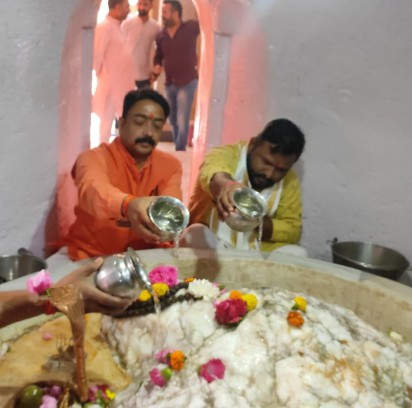
Ritual worship at Baba Budha Amarnath

In devotional storytelling, Baba Budha Amarnath is often treated as an important early point in the sacred journey associated with the Amar Katha. The shrine is therefore approached not merely as an isolated temple but as part of a larger spiritual route.

This belief gives the place unusual depth. Pilgrims do not see the yatra only as travel to a temple; they see it as entry into a continuing story about Shiva, immortality, listening, and revelation.

The story endures because each pilgrimage feels like one more retelling of a conversation that never quite ends.

01

The journey begins in meaning before it begins on the road

The Amar Katha connection gives the shrine a role of sacred beginning, not just sacred arrival.

02

Living memory grows through retelling

Stories survive here because pilgrims, priests, families, and local communities continue to narrate and renew them.

03

Place and myth reinforce one another

The mountain setting, water, ritual sequence, and procession routes make the legend feel embodied in the land itself.
A four-age framework used to hold sacred continuity

Many devotional narratives describe the shrine as surviving and reappearing across the changing ages.

Satya Yug
Original manifestation

The shrine is remembered as part of an ancient sacred timeline in which Shiva devotion is rooted directly in place.

Treta Yug
Pulastya association

Pilgrim memory connects the area with Rishi Pulastya, giving the river and surrounding landscape an enduring sacred meaning.

Dvapara Yug
Pandava remembrance

Local storytelling extends the shrine’s continuity by linking it with epic memory and the broader Mahabharata imagination.

Kali Yug
Rediscovery and worship

The shrine continues through renewed worship, temple care, seasonal pilgrimage, and the resilience of living tradition.

Rediscovery, care, and continuity

Temple
Stone, form, and preservation

Official district descriptions remember the temple as being built from one large stone, giving the shrine both physical uniqueness and narrative power.

Route
Procession and local reception

The yatra is not only about the shrine; it includes halts, welcomes, seva points, and ceremonial movement from Poonch toward Mandi.

People
History held by communities

The continuity of the shrine depends on priests, organisers, volunteers, pilgrims, and local residents who keep the tradition active year after year.

Pulastya, river memory, and the meaning of place

One of the strongest historical threads around Baba Budha Amarnath is the connection between the shrine and the surrounding water geography, especially the memory of Pulastya or Pulsta Nadi.

This matters because the shrine is not remembered as an abstract holy point. It is tied to flowing water, to ritual preparation, to natural beauty, and to the belief that sacred stories settle into actual landforms.

That is why the history of the shrine often feels less like a list of dates and more like a layered map of devotion: mountain, river, temple, procession, and return.

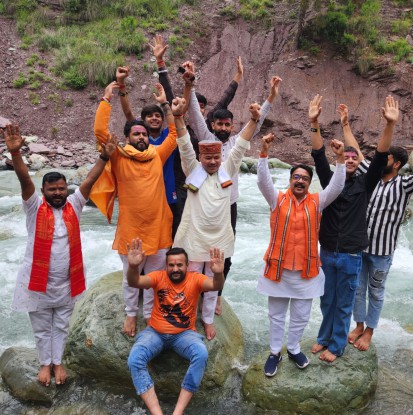
Pulastya river setting near the shrine

How historical memory becomes a living pilgrimage

Chhari Mubarak

The ceremonial movement of the holy mace keeps the historical dimension of the pilgrimage visible and collective.

Bhajan and congregation

Devotional singing, havan, community gathering, and speeches help carry sacred memory into the present year after year.

Shared participation

The strength of the pilgrimage comes from participation by pilgrims, service teams, and local communities along the route.

Continue from story into pilgrimage planning

Open the yatra page for route preparation and facilities, or explore the gallery for visual references from the shrine and surrounding landscape.